Culture 2 min read
The Swahili words that change a journey
You do not need to learn a language. A few words, said at the right moment, are enough to turn you from tourist into guest.
Weltweg editorial team
In this article4 sections
Swahili is the lingua franca of much of East Africa, spoken in Kenya, in Tanzania and well beyond their borders. In hotels people speak English, but a few words are enough to change the tone of an encounter. Pronunciation is simple: it is read almost exactly as it is written, with the stress on the penultimate syllable.
Greetings
- Jambo: hello, the tourists’ greeting. Among local people Habari?, how are you?, is more common, to which you reply Nzuri, fine.
- Karibu: welcome. You will hear it everywhere, and the reply is Asante, thank you.
- Asante sana: thank you very much.
- Kwaheri: goodbye.
- Lala salama: sleep well, good night.
Everyday words
- Ndiyo and hapana: yes and no.
- Tafadhali: please.
- Pole: I’m sorry, even for a small mishap. Pole pole: slowly, slowly, the pace at which almost everything works.
- Hakuna matata: no problem. It is a common expression, long before it became famous on the big screen.
- Bei gani?: how much is it?
- Maji: water.
- Rafiki: friend.
On safari
- Simba: lion.
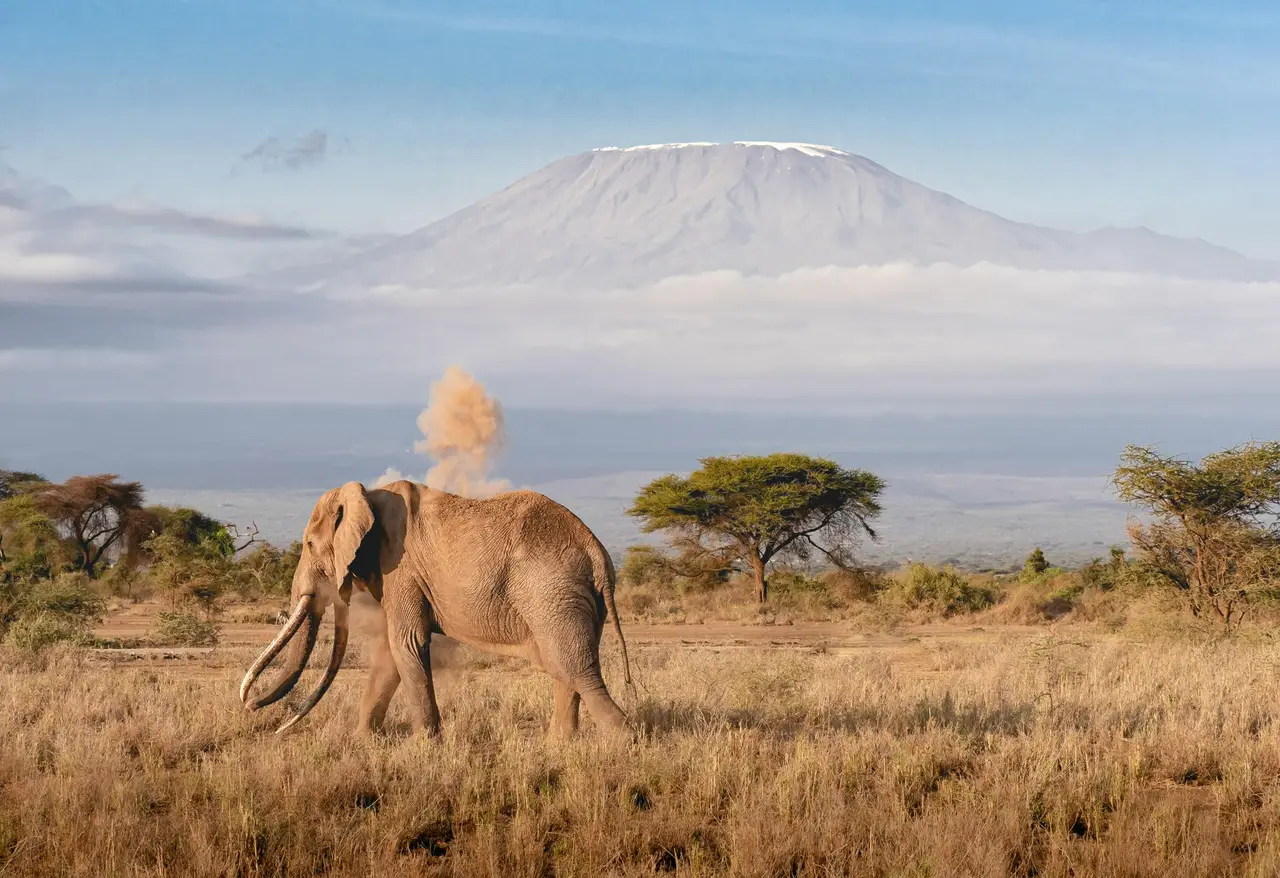
- Tembo: elephant.
- Twiga: giraffe.
- Chui: leopard.
- Kiboko: hippopotamus.
- Safari: journey, of any kind, not only one to see animals.
And one to recognise
Mzungu is what fair-skinned foreigners are often called, especially by children. It is usually not offensive in the slightest: it is an observation, sometimes a greeting.