The word comes from the Arabic sawahil, coasts. Swahili civilisation was born from the meeting of the Bantu peoples of the coast with Arab, Persian and Indian merchants carried by the monsoons: a trade route that for centuries linked Zanzibar to the Persian Gulf and India.
The language
Kiswahili is a Bantu language with a large vocabulary of Arabic origin. Today it is an official language in Tanzania and Kenya and the lingua franca of much of East Africa. Words you already know: safari means journey, jambo is a greeting, hakuna matata really does mean no problem.
Stone Town
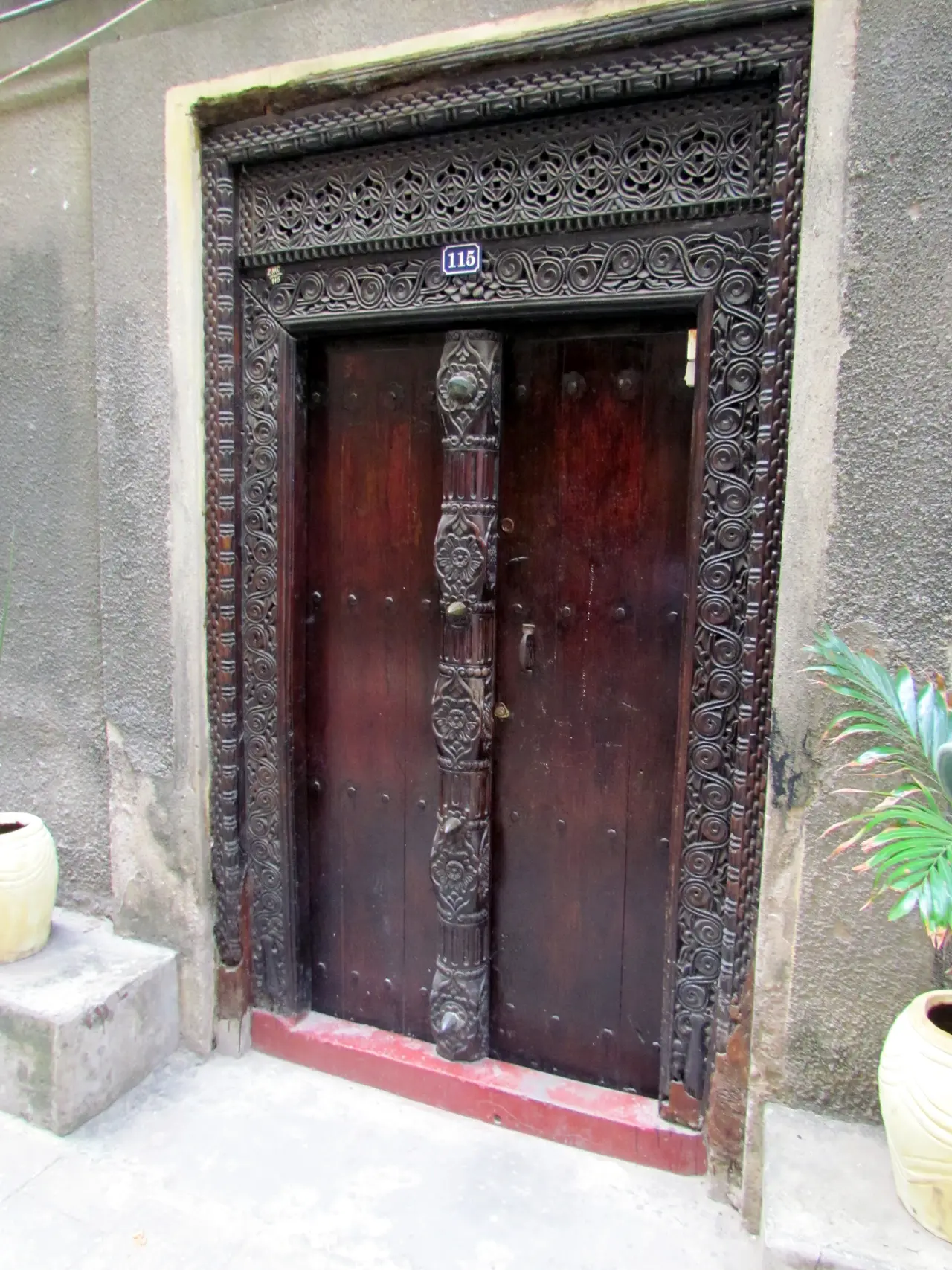
This is where Swahili civilisation can still be read in the architecture: carved wooden doors, inner courtyards, narrow alleys built for shade. A UNESCO World Heritage Site since 2000. It is also where you can read the part that never appears in the brochures: Zanzibar was one of the main slave markets of the Indian Ocean, and the town preserves the memorial that remembers it.
Spices and monsoons
Cloves, cinnamon, nutmeg: the plantations arrived in Zanzibar in the nineteenth century and made it the world’s leading producer of cloves. Trade followed the monsoons, which allowed ships to sail to India in one season and return in the opposite one.
Where to encounter it today
In Stone Town, in the fishing villages along the coast, in the cooking: coconut rice, spiced fish, urojo. And in the everyday coexistence of Islam and local traditions, which on the island is the norm.