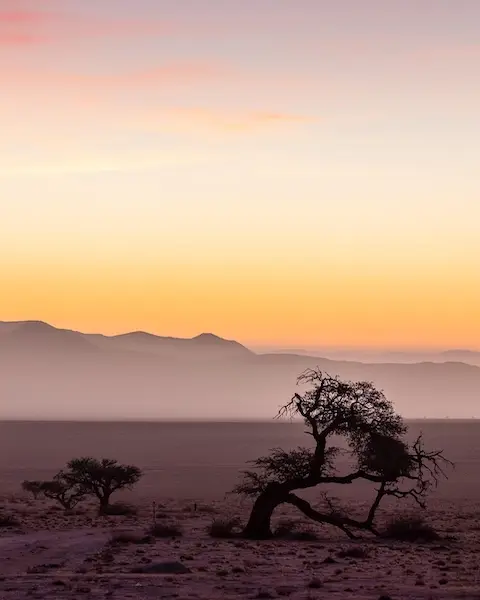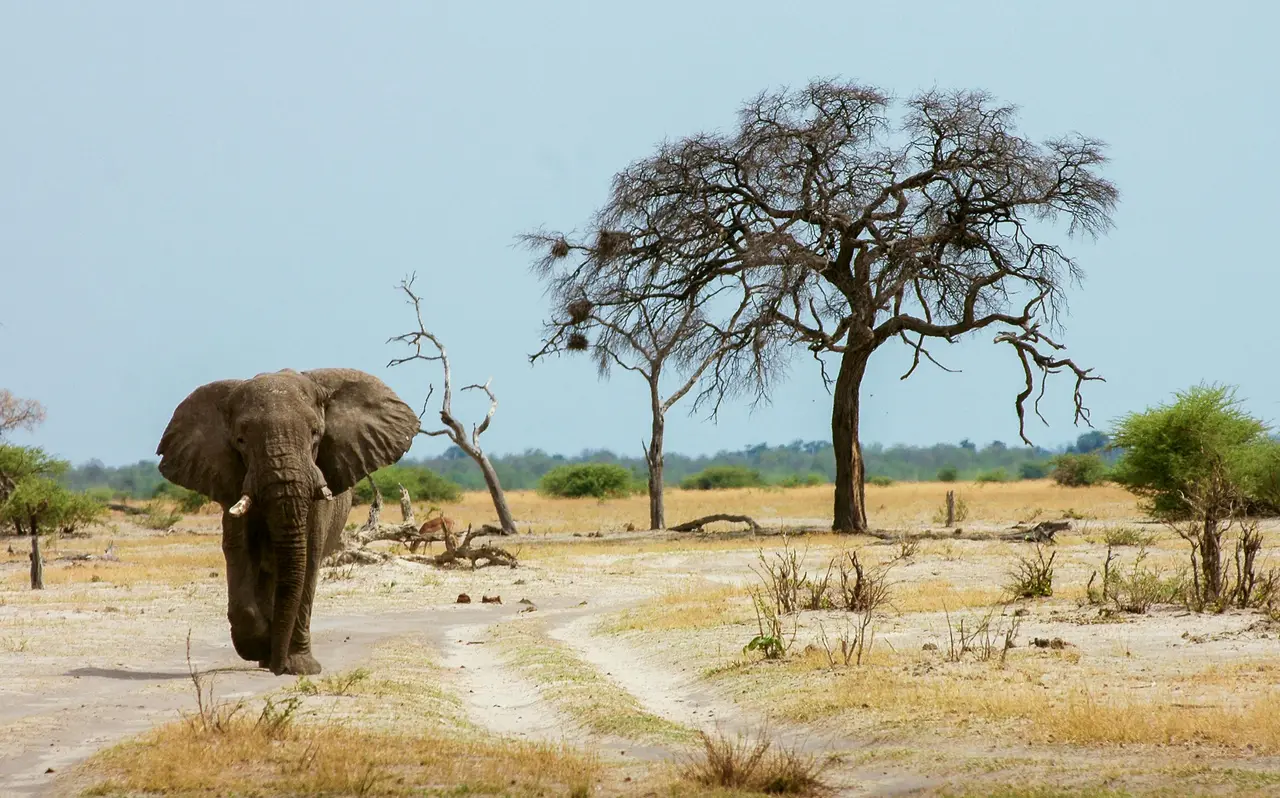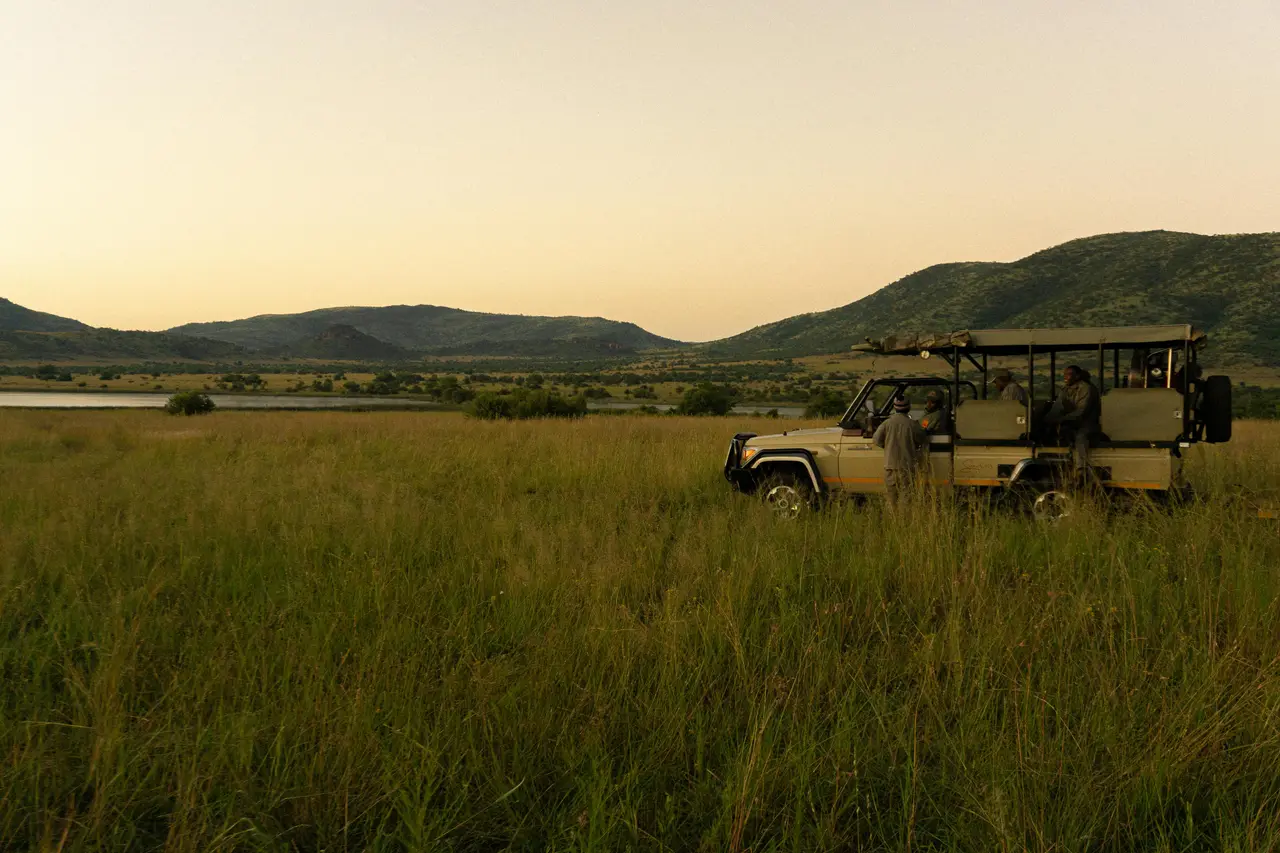
Safari in Swahili simply means journey. In practice it is a day set by the animals, not by you: you head out at dawn because that is when the predators are active, return at midday when the heat brings everything to a halt, and set off again in the late afternoon.
How a day works
Wake-up between five and six. Three or four hours of game drive, with your guide looking for tracks, listening for alarm calls and knowing where the pride slept. A picnic lunch at a designated area or a return to the lodge. In the afternoon you head out again, until sunset, when the parks close.
There are no set routes and no timetable beyond this. In a private vehicle, you decide together with your guide.
What you see, and what you don’t
The Big Five — lion, leopard, elephant, buffalo, rhino — is a phrase inherited from hunting, not a beauty ranking. The leopard is the hardest; the black rhino is seen almost only in Ngorongoro.
No serious guide will promise you a sighting. Anyone who does is selling something they don’t control.
Private or shared
In a vehicle shared with four other passengers, you return when the others want to. In a private vehicle you stop when you need to, stay an hour with a leopard if it is worth it, and can talk without disturbing anyone. With children it is not a luxury: it is the difference between a successful journey and an exhausting one.
Where to go
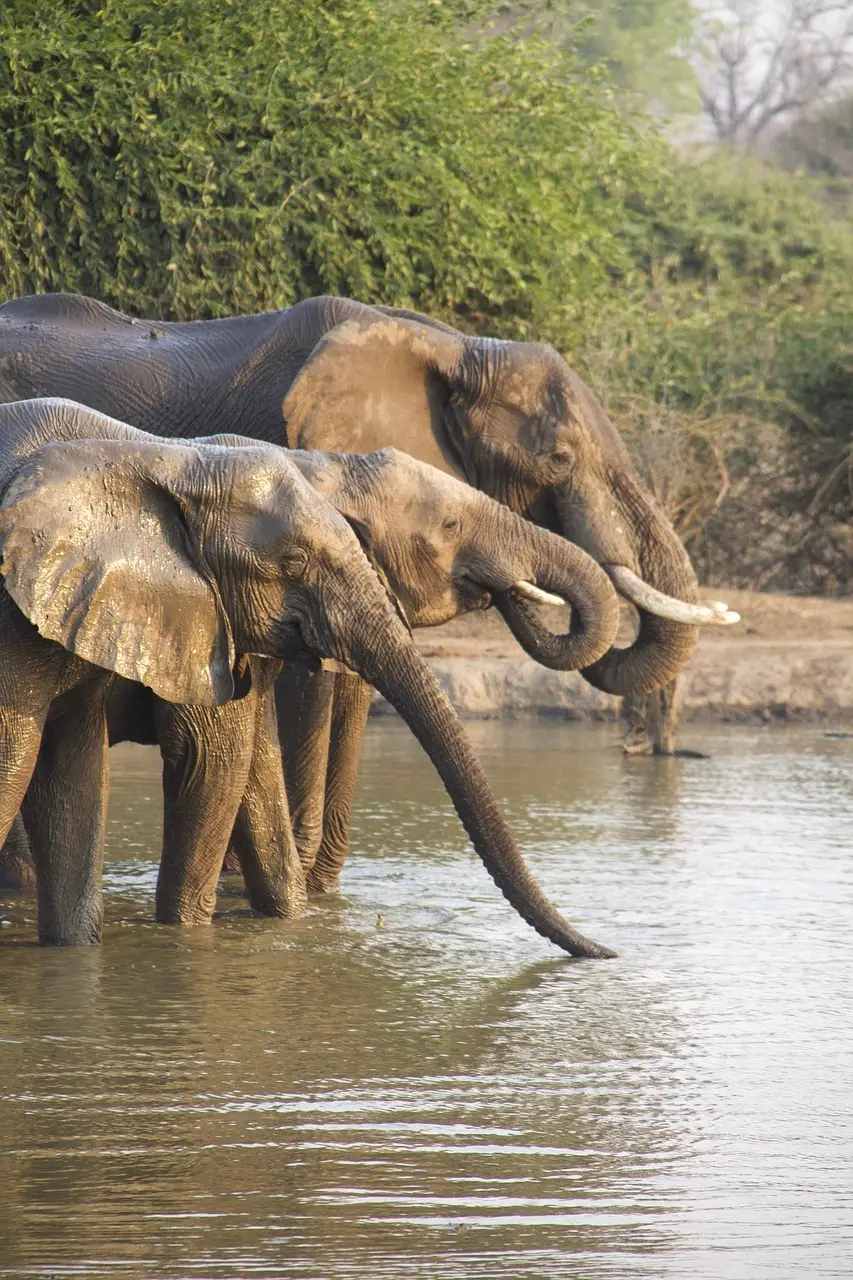
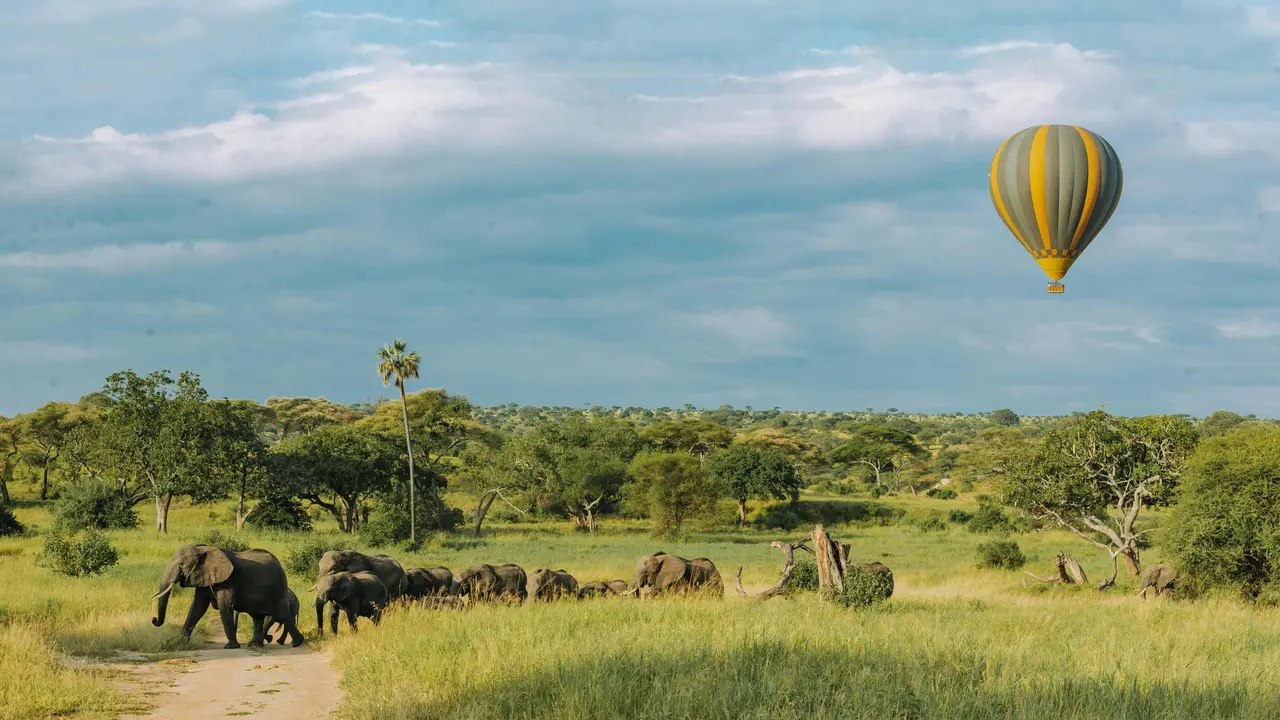
In Tanzania, in the northern parks around the Serengeti. In Kenya, in the Masai Mara, with the chance to walk at Hell’s Gate and on Longonot. In Zambia, on foot, in South Luangwa, where the walking safari was born. In Namibia, driving yourself, with the waterholes of Etosha where you sit and wait.
What it costs
From €3,500 per person for an essential itinerary to over €8,000 for superior-category lodges, flights and insurance included. The difference comes down to accommodation, the number of travellers and the time of year. Find out more in what a journey to Africa costs.