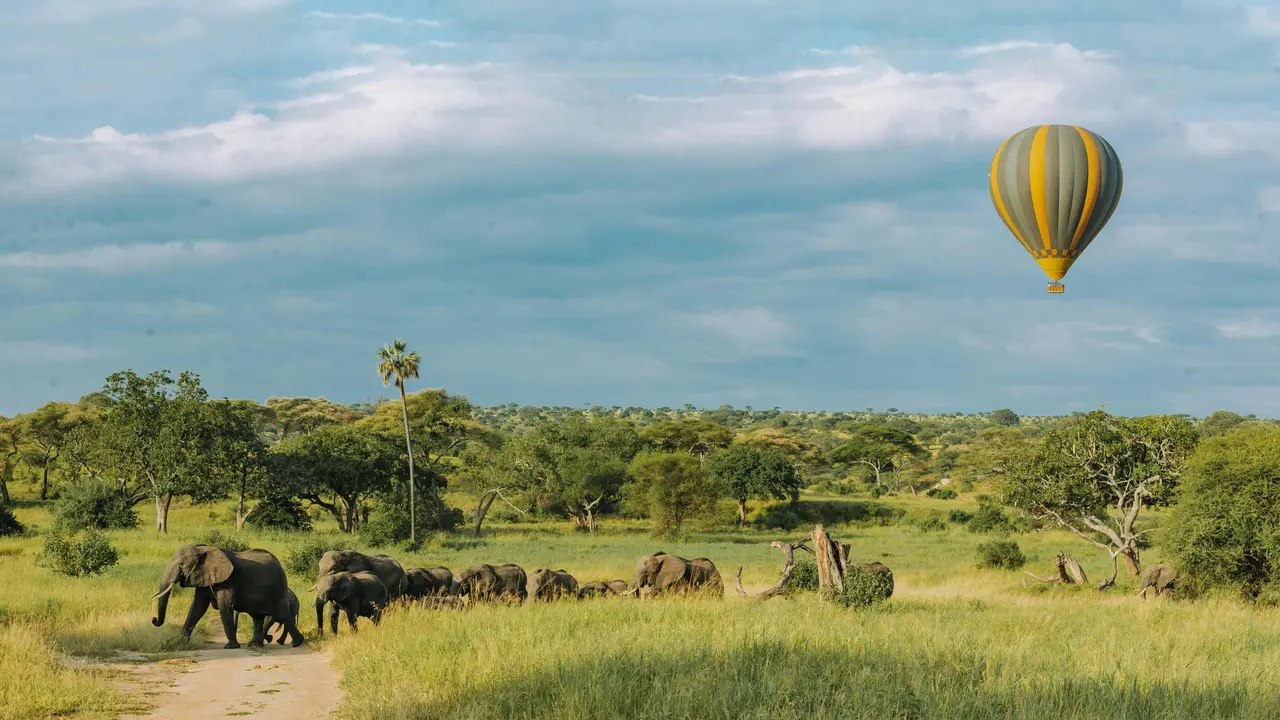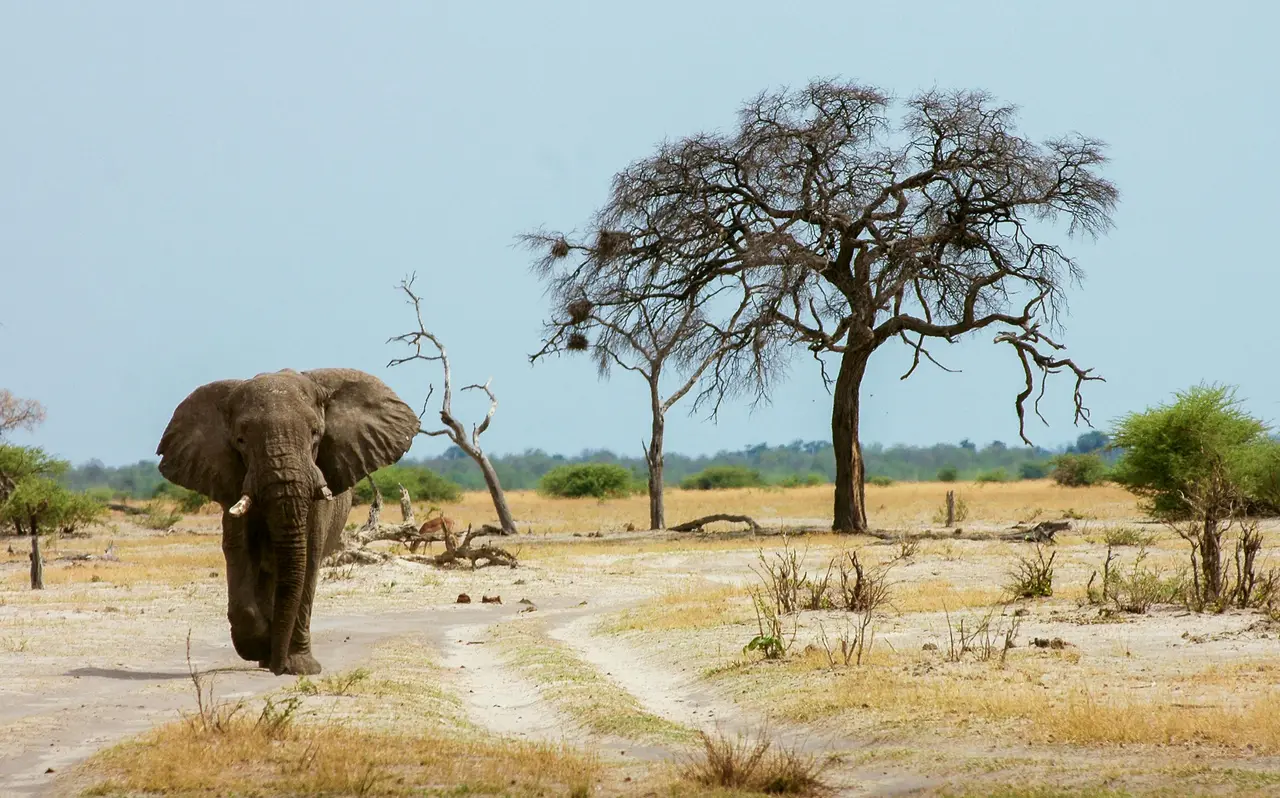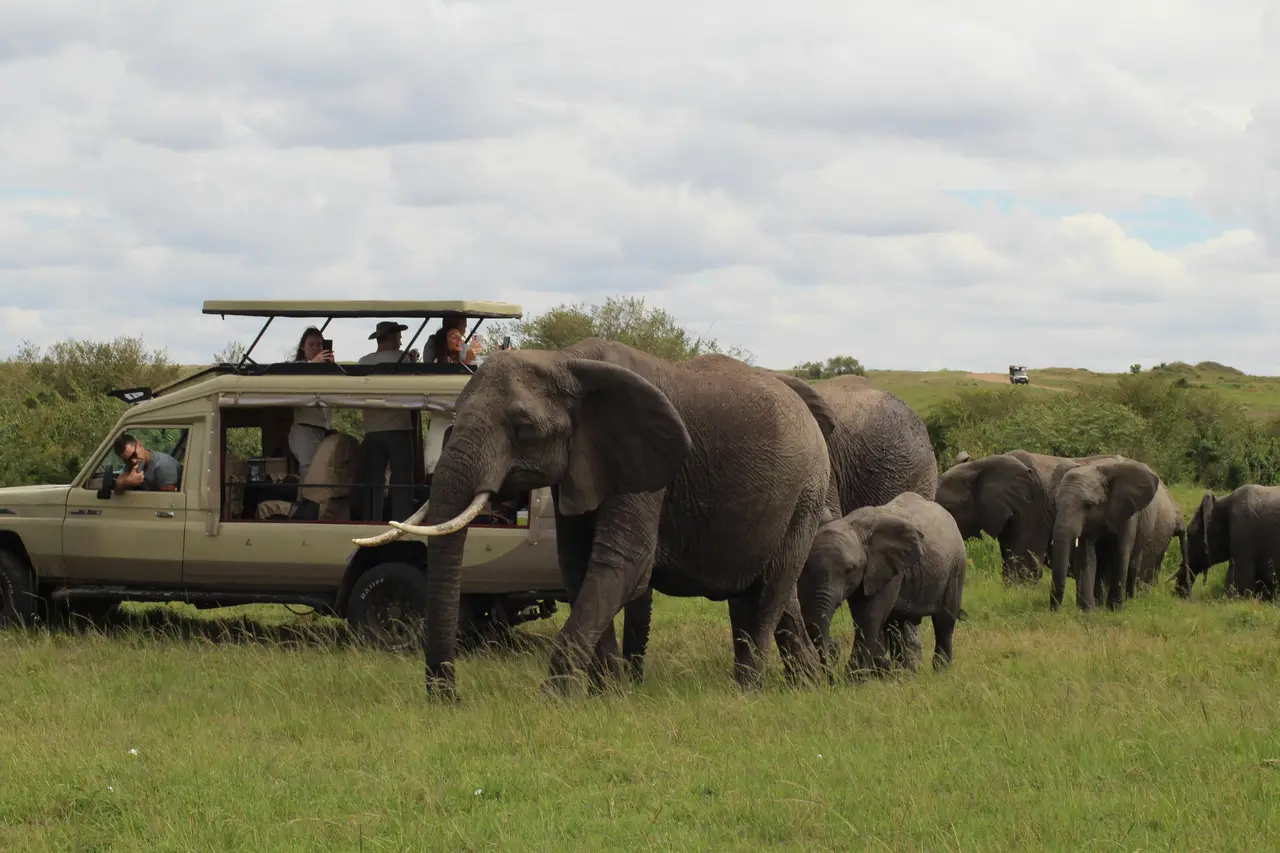
A volcano that collapsed in on itself two and a half million years ago left a bowl some twenty kilometres across and six hundred metres deep. Around thirty thousand large mammals live here permanently and, with water and grass all year round, have no reason to migrate: that is why you see so much in a single day at Ngorongoro.
Why it differs from a park
It is not a national park but a Conservation Area, a multiple-use zone where wildlife coexists with human activity. That is why the Masai may graze their herds here, something forbidden in the neighbouring Serengeti. A UNESCO World Heritage Site since 1979 and a biosphere reserve since 1981.
What you see
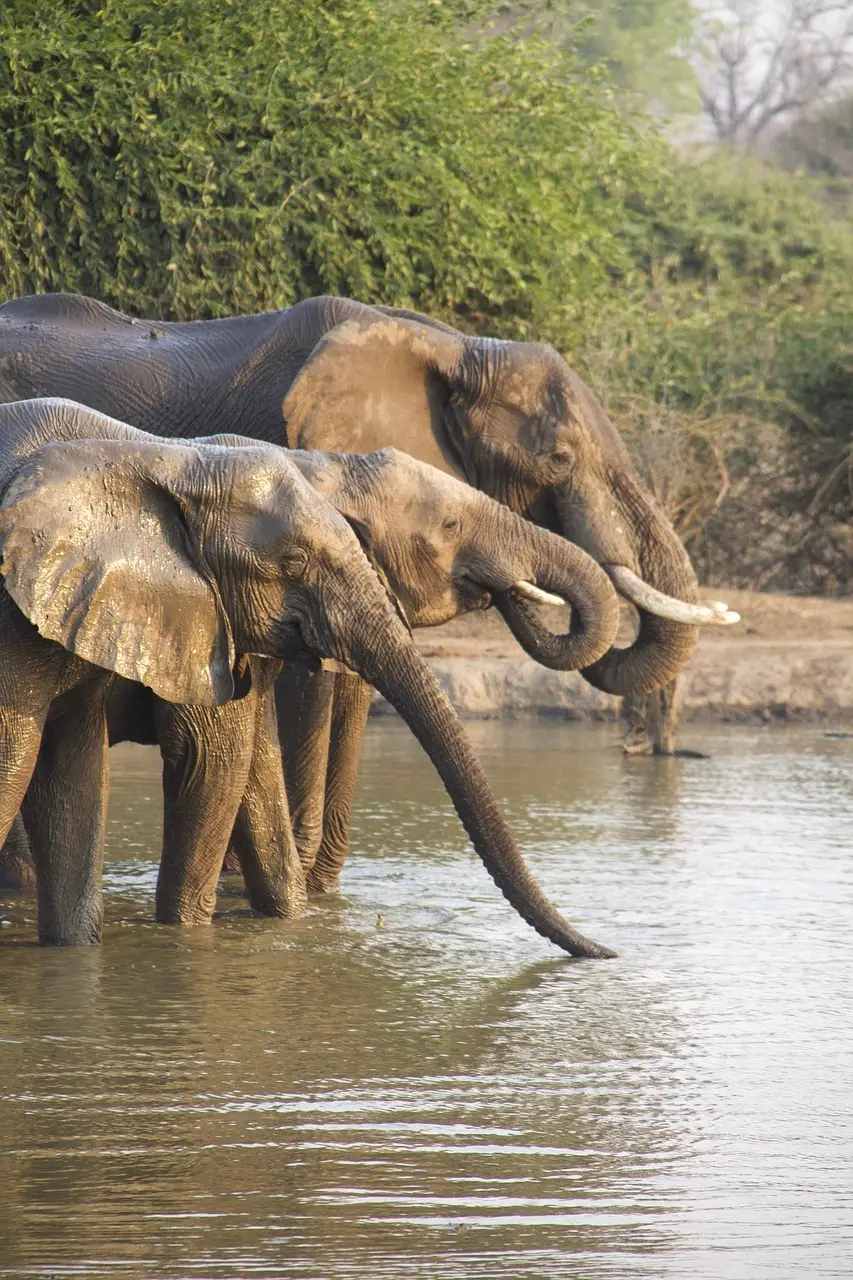
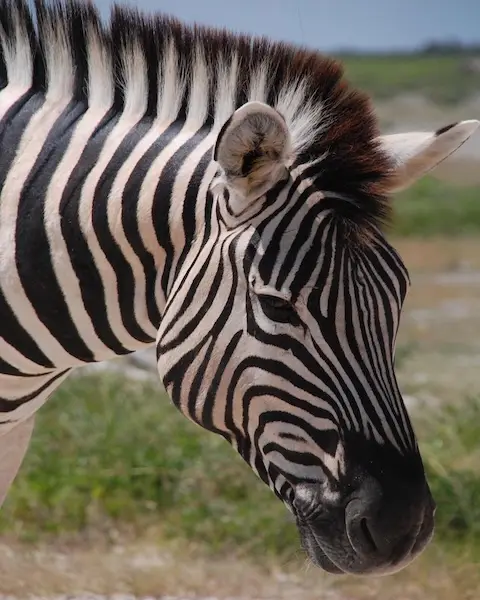
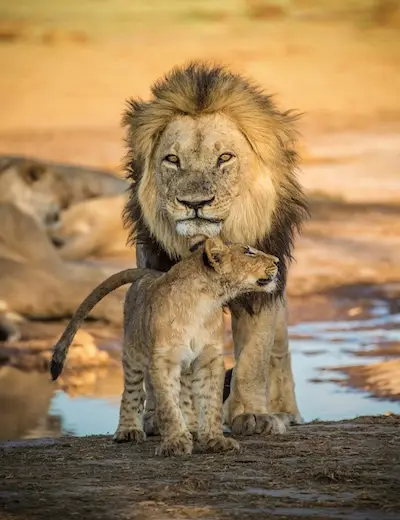
It is one of the very few places in Tanzania where you can see the black rhino, reduced to a few dozen individuals. There are lions, elephants with very long tusks, buffalo, hippos and, on Lake Magadi in the centre, flamingos by the thousand. Giraffes, on the other hand, are absent: the steep walls of the caldera are an insurmountable obstacle for them.
Find out more about the Big Five.
When to go
All year round, and that is its strength: it does not depend on the Great Migration. In the dry season, from June to October, visibility is better; between December and March the caldera is green and the Ndutu plains, within the same conservation area, host the calving season.
Go down at dawn: in the middle of the day the crater floor fills with vehicles and the animals move into the shade.
Something to know
The coexistence of the Masai and wildlife within the area is now at the centre of strong tensions: the Tanzanian government has promoted the relocation of communities to other regions, a policy contested by human rights organisations. Visitors to the area are crossing a contested territory, not a postcard.