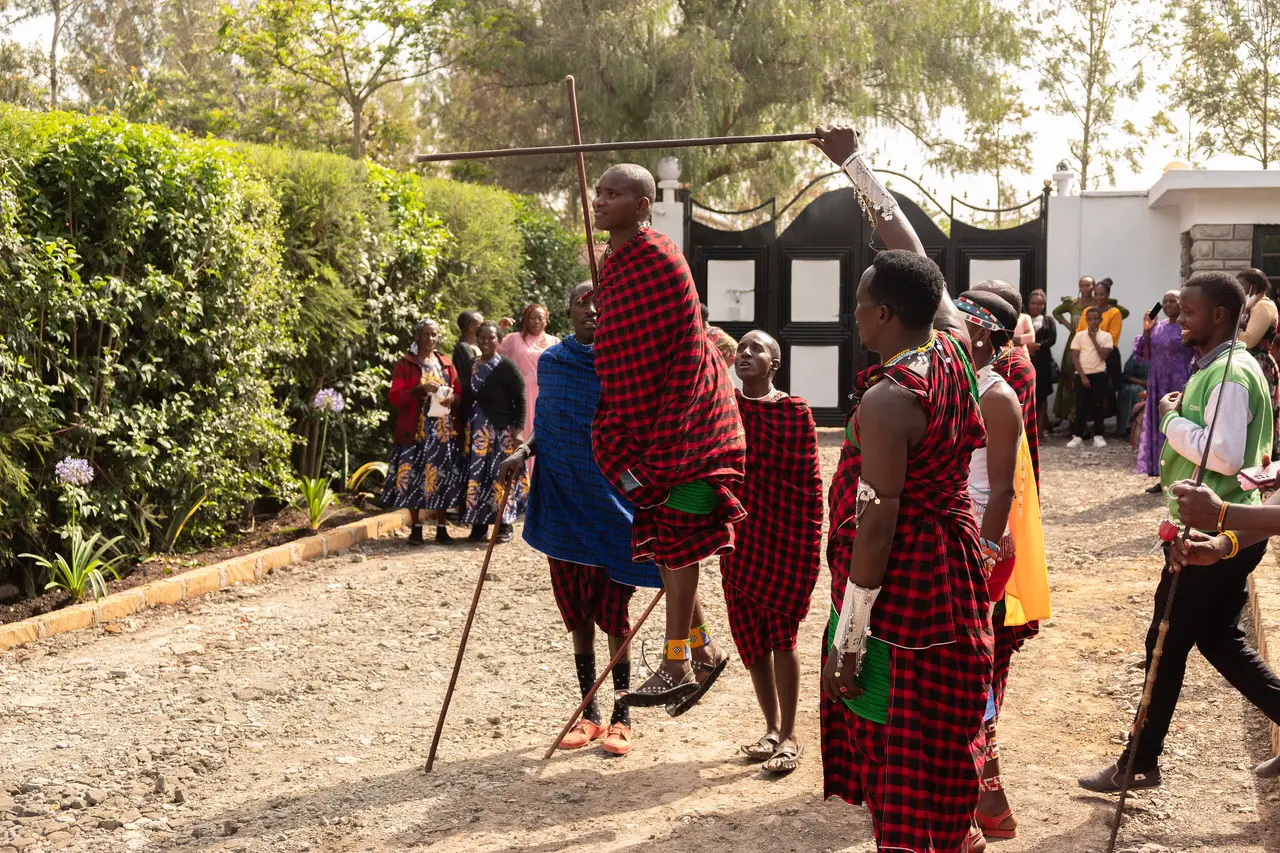
The Masai live mainly in the area between the Masai Mara in Kenya and the Serengeti in Tanzania. They speak Maa, a Nilotic language, and for centuries their economy has revolved around cattle, which are not only food but a measure of wealth and status.
Their relationship with wildlife
This is why they are the only human group historically allowed to live and graze within the Ngorongoro Conservation Area, which, unlike a national park, was created precisely as a multiple-use area. They do not hunt or eat game, so their presence does not compete with the wildlife. It must be said, however, that in recent years this coexistence has been the subject of strong tensions: the Tanzanian government has promoted the relocation of communities out of the area, a policy contested by human rights organisations.
What you see and what you don’t
The red cloth, the shuka, and the beaded jewellery are real and everyday, not a costume for visitors. The ritual jump that appears in every photograph is the adumu, a male initiation dance: it genuinely exists, but in its tourist version it is often taken out of context.
It is worth knowing this beforehand, because it changes the way you look at a village visit.
How they live today
Many communities have lost access to historic grazing lands that have become parks. Some have found a source of income in tourism, others merely endure it. The difference between a respectful visit and a staged performance lies in who receives the money and who decides what to show.
Where to meet them
In the villages around Mto wa Mbu and in the Karatu area, in Tanzania, and along the edges of the Masai Mara in Kenya, where many families have leased their land to the conservancies. On our itineraries the visit takes place with communities our local partners have worked with for years, and the payment stays in the village.