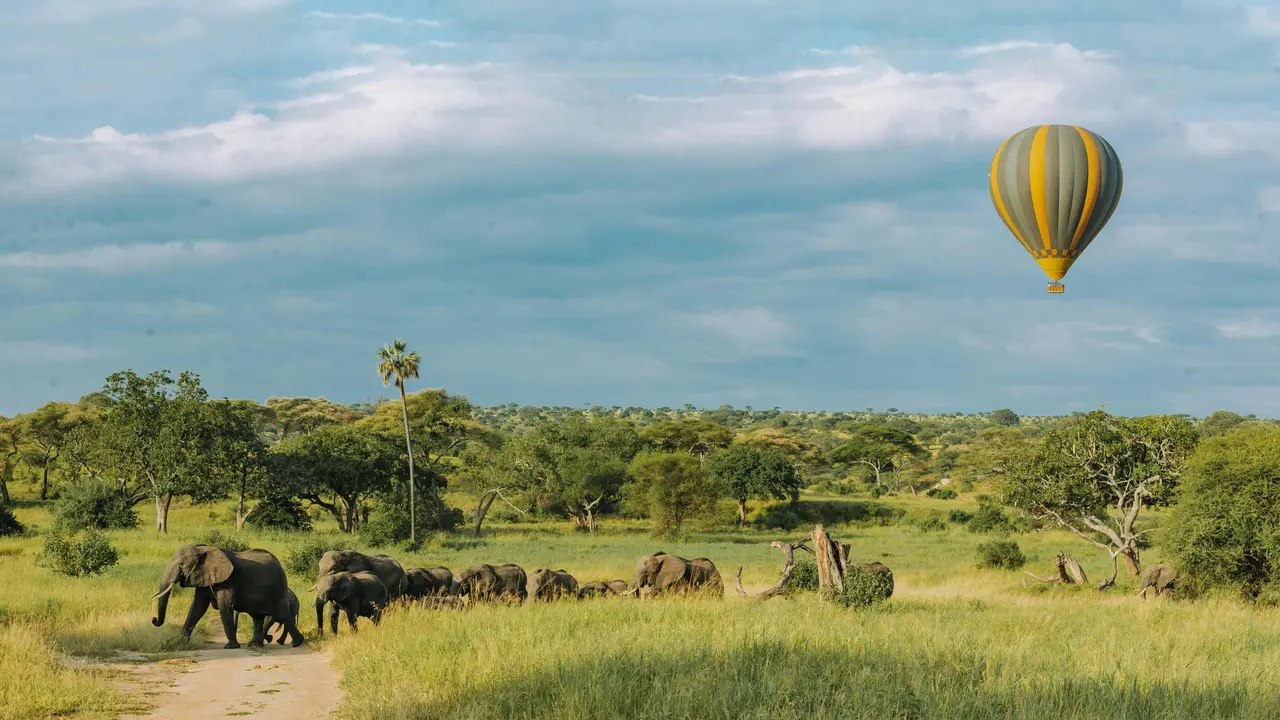
The name comes from the Masai word Siringet, meaning endless plain. It is the oldest and largest park in Tanzania, a World Heritage Site since 1981, and together with the Ngorongoro area and the Masai Mara it forms a single ecosystem that knows no political borders.
Why it matters
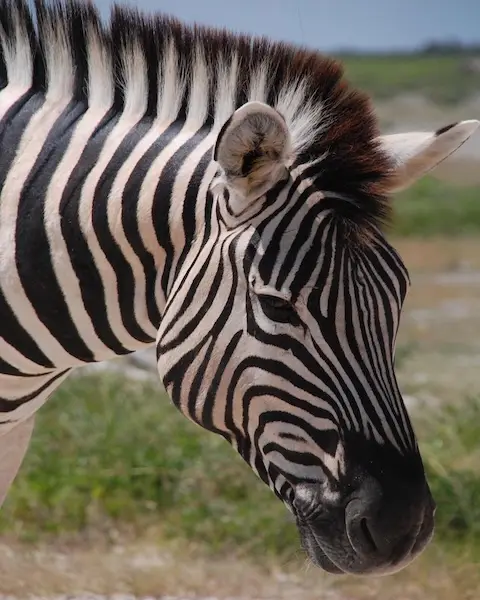
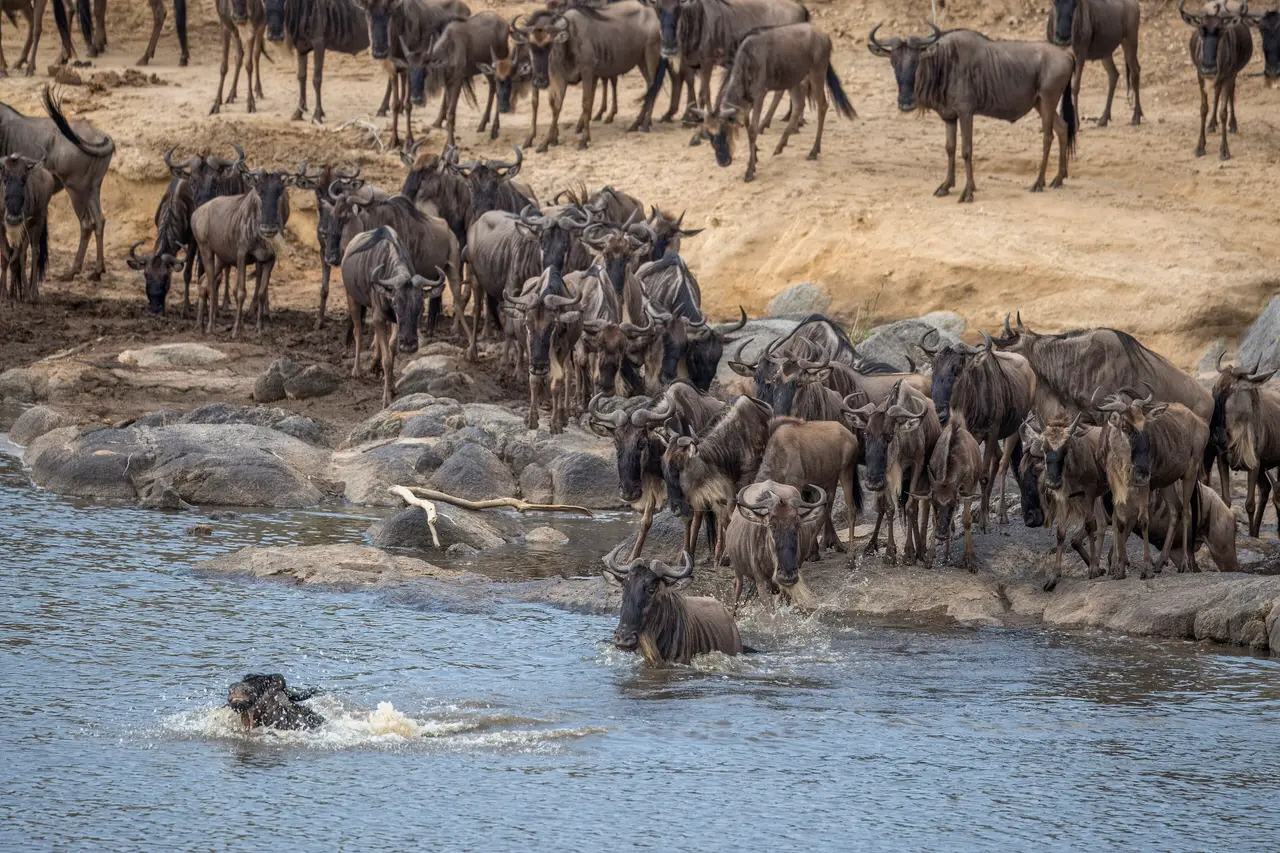
It is home to the Great Migration: some two million wildebeest and three hundred thousand zebras circling all year round as they follow the rain. It is the largest movement of land mammals left in the world, and the reason the Serengeti resembles no other African park.
The lion population exceeds two and a half thousand, and has been growing since the 1960s. There are leopards in the acacias, cheetahs on the open grasslands, crocodiles and hippos along the rivers.
How it is divided
Seronera, the centre, is the area with the densest wildlife all year round: the river attracts almost every species in the park. Ndutu, in the south, within the Ngorongoro area, is where the migration is born between December and April. The north, towards the Mara River, is where the crossings take place between July and September.
When to go
It depends on what you are looking for, and that is the question that shapes the whole journey. Between December and April, Ndutu hosts the calving season and the highest concentration of predators of the year. Between July and September, the Mara crossings take place in the north. From June to October, the dry season makes sightings easier everywhere.
Find out more in when to go to Africa.
Who lives here
The Serengeti is a national park, and therefore uninhabited. But its edges have been Masai land for centuries, and in the neighbouring Ngorongoro area grazing is still permitted: it is the only place in Tanzania where people and wildlife share the same territory by law.
How to visit
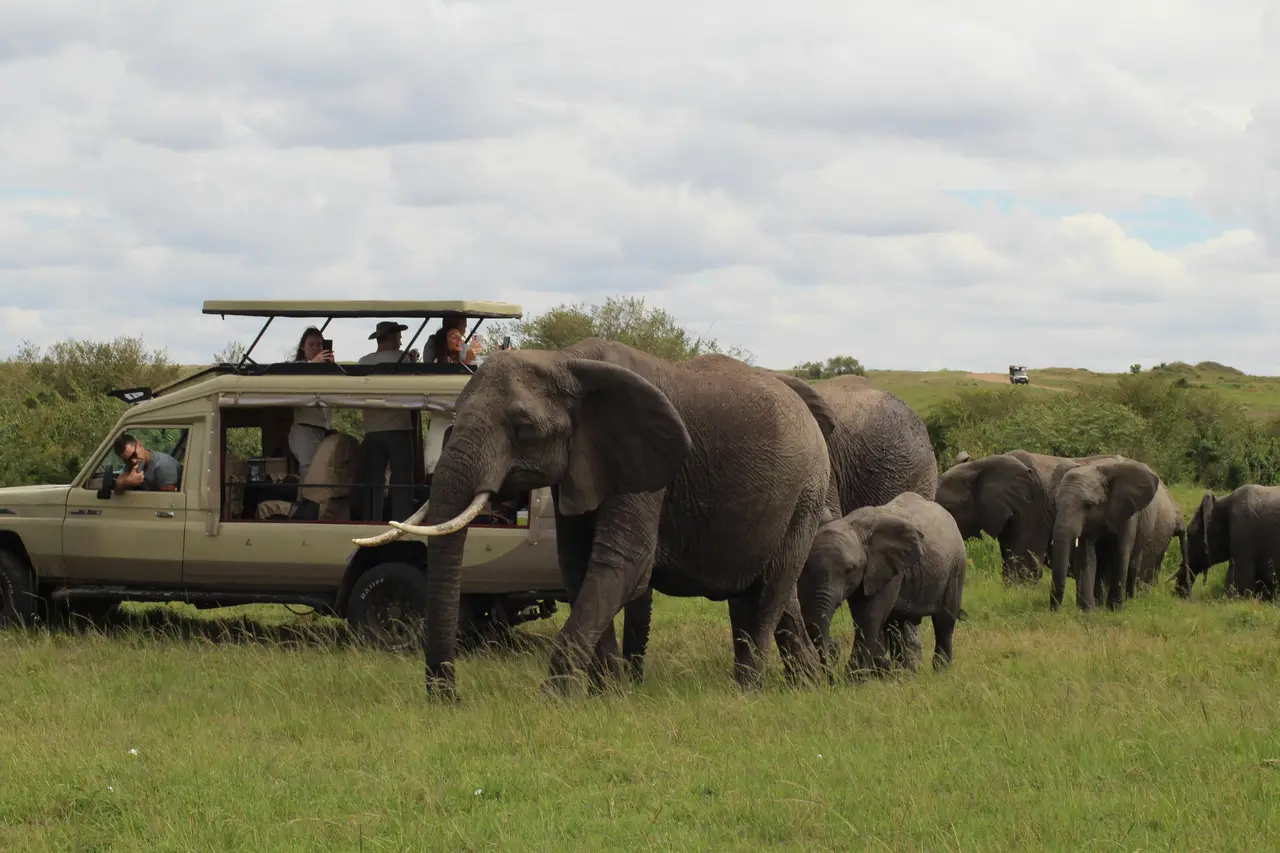
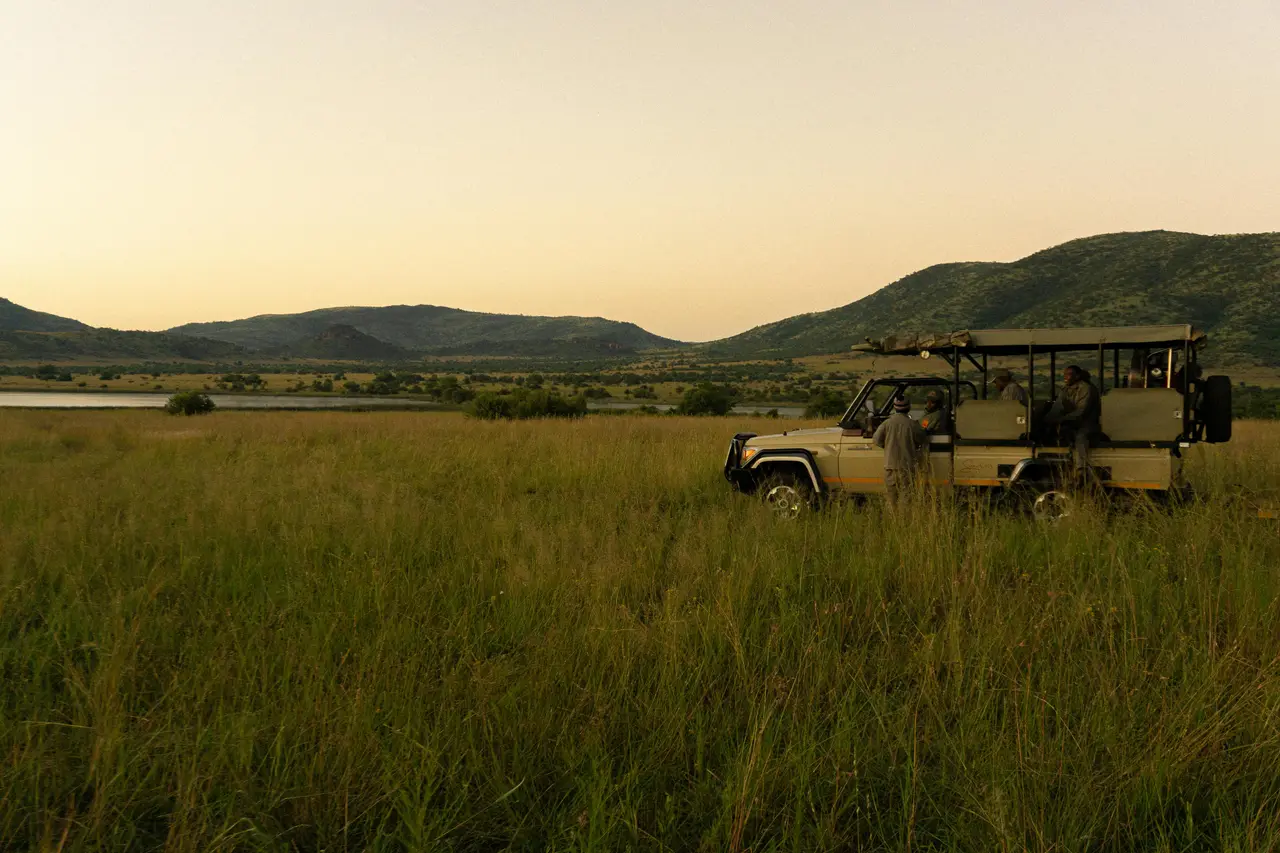
You explore on a photographic safari, in a 4x4 with a pop-up roof, at dawn and in the late afternoon when the animals are active. You sleep in lodges or in mobile tented camps that follow the migration and move with it.