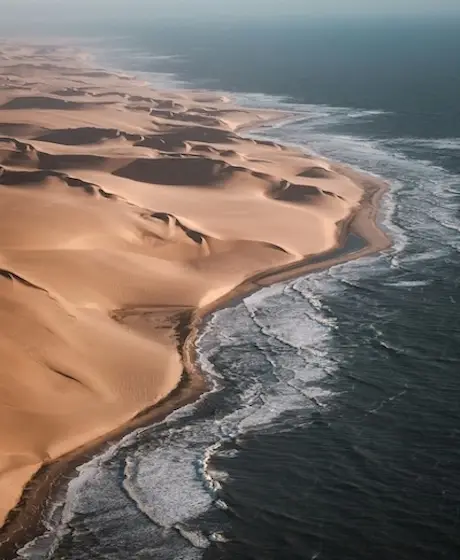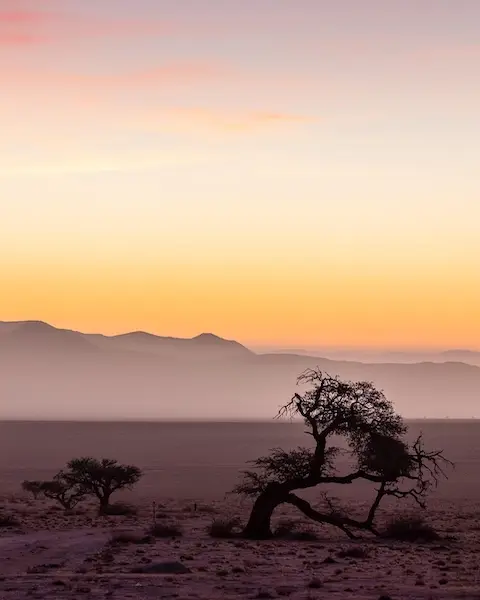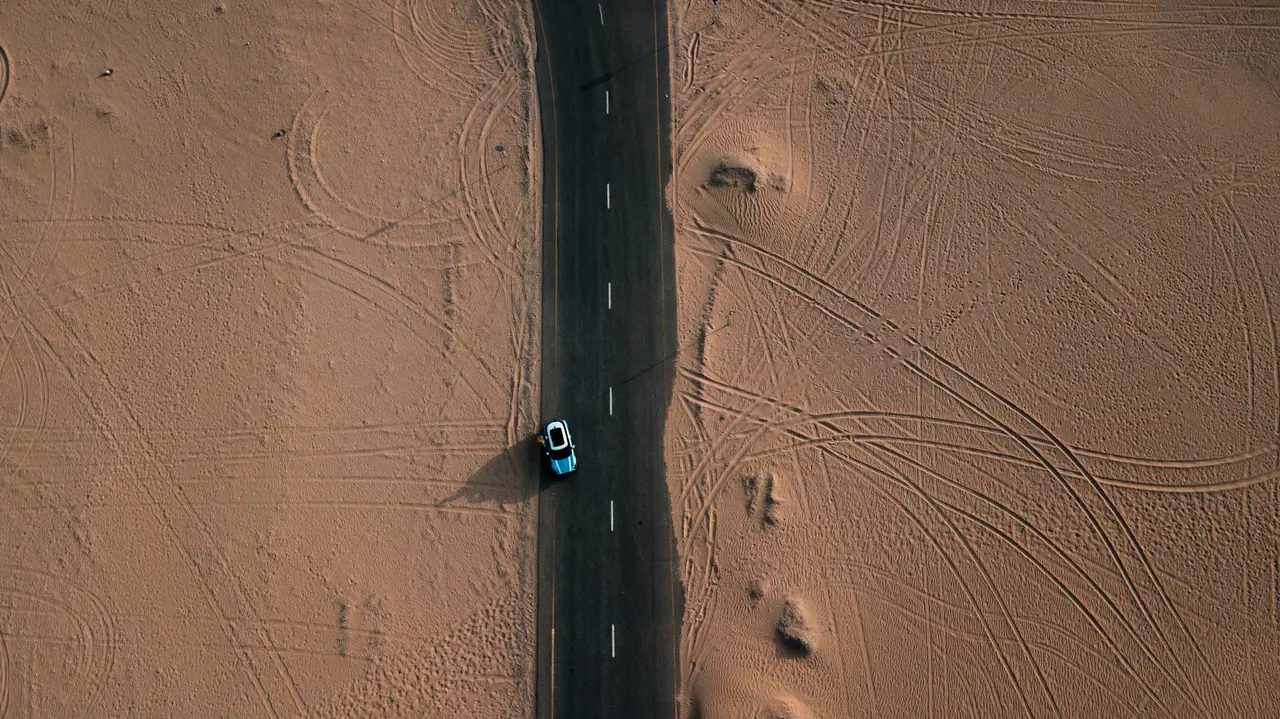
Etosha, in Oshiwambo, means great white place. At the heart of the park lies an expanse of salt and clay covering 4,760 km², almost a quarter of its total area, dry for most of the year. Around it are savannah, scrub and a network of waterholes that are the true centre of the park’s life.
The safari of waiting
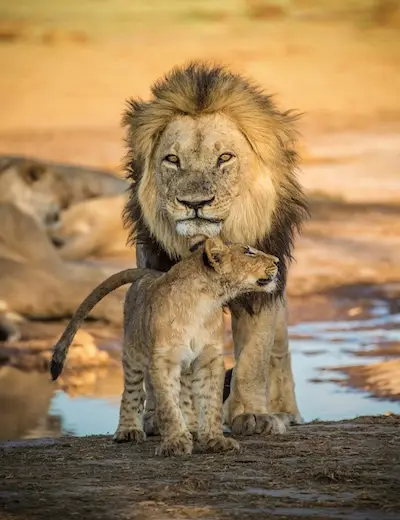
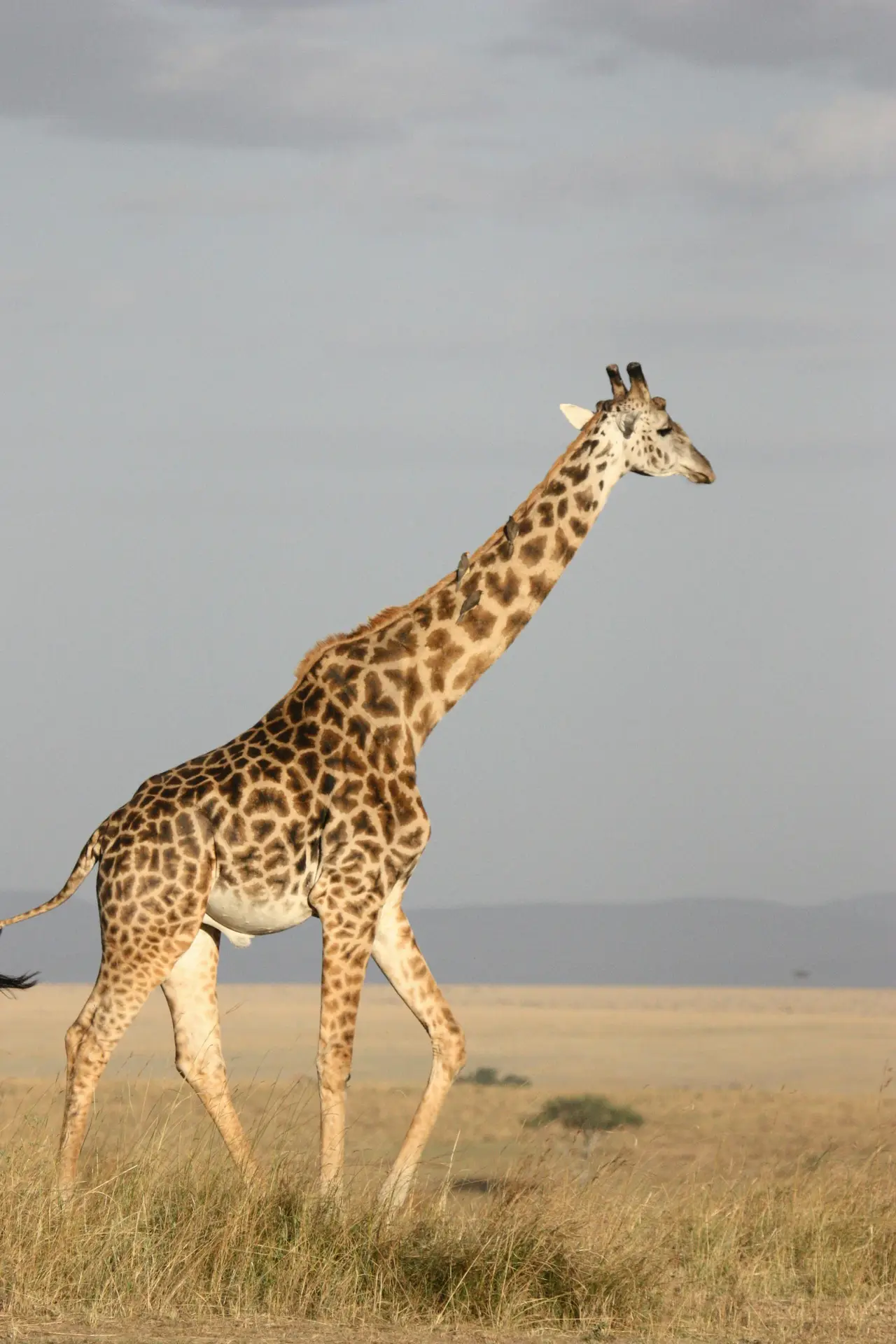
In the dry season the only water is in the waterholes: more than forty, mostly fed by artificial boreholes. Here you don’t give chase: you choose a waterhole, switch off the engine and wait for elephants, giraffes, zebras, oryx and lions to arrive. At Okaukuejo the waterhole is floodlit at night, and from the camp you can watch black rhinos and elephants coming to drink.
Driving yourself
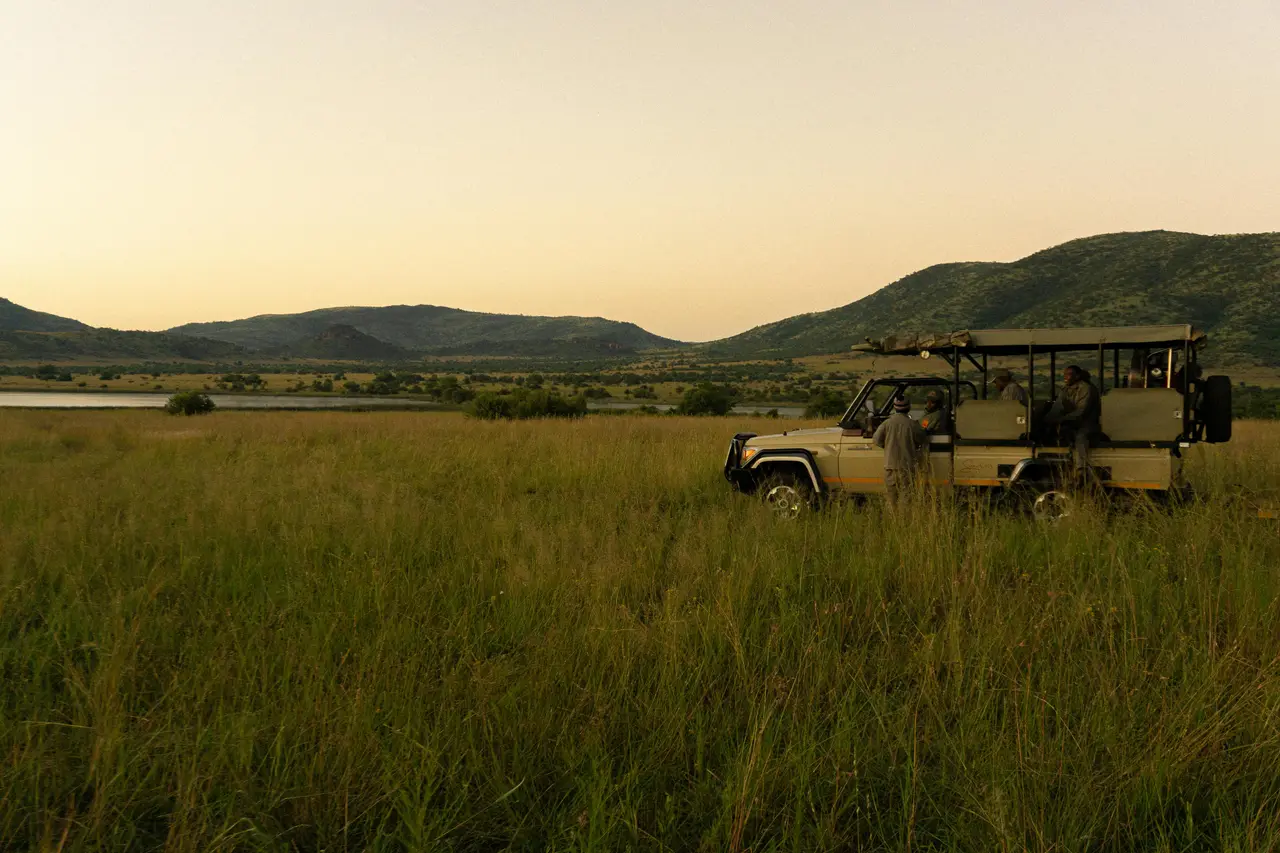
It is one of the great African parks best suited to self-drive travellers: the tracks are unpaved but well maintained, a map of the waterholes is handed out at the entrance, and inside the park there are camps such as Okaukuejo, Halali and Namutoni, an old German fort that is now a national monument. The rules are strict: you may not leave your car outside the permitted areas, and the camp gates close at sunset.
The black rhino
Etosha is one of the strongholds of the black rhino, and for that very reason a target for poaching: in 2022, of the 61 rhinos killed in Namibia, 46 were killed inside the park. It is one of the reasons why the animals’ locations are not shared.
Who lived here
Long before the reserve, the Hai//om lived around the springs of Okaukuejo, Halali and Namutoni. As the protected area was created and transformed over the twentieth century, they were removed from their lands, and the question of their access remains open even after Namibian independence in 1990.
When to go
From June to October, the dry season, animals gather at the waterholes and it is the best time for sightings. From November to April the rains arrive: animals disperse, the young are born and the landscape turns green, but wildlife is harder to see. In very wet years the pan floods for a few weeks.