Points of view 3 min read
When there are too many vehicles: how to choose a safari that is not part of the problem
Overcrowding is not a flaw of Africa’s parks: it is a consequence of the way safaris are sold. You can choose differently.
Weltweg editorial team
In this article5 sections
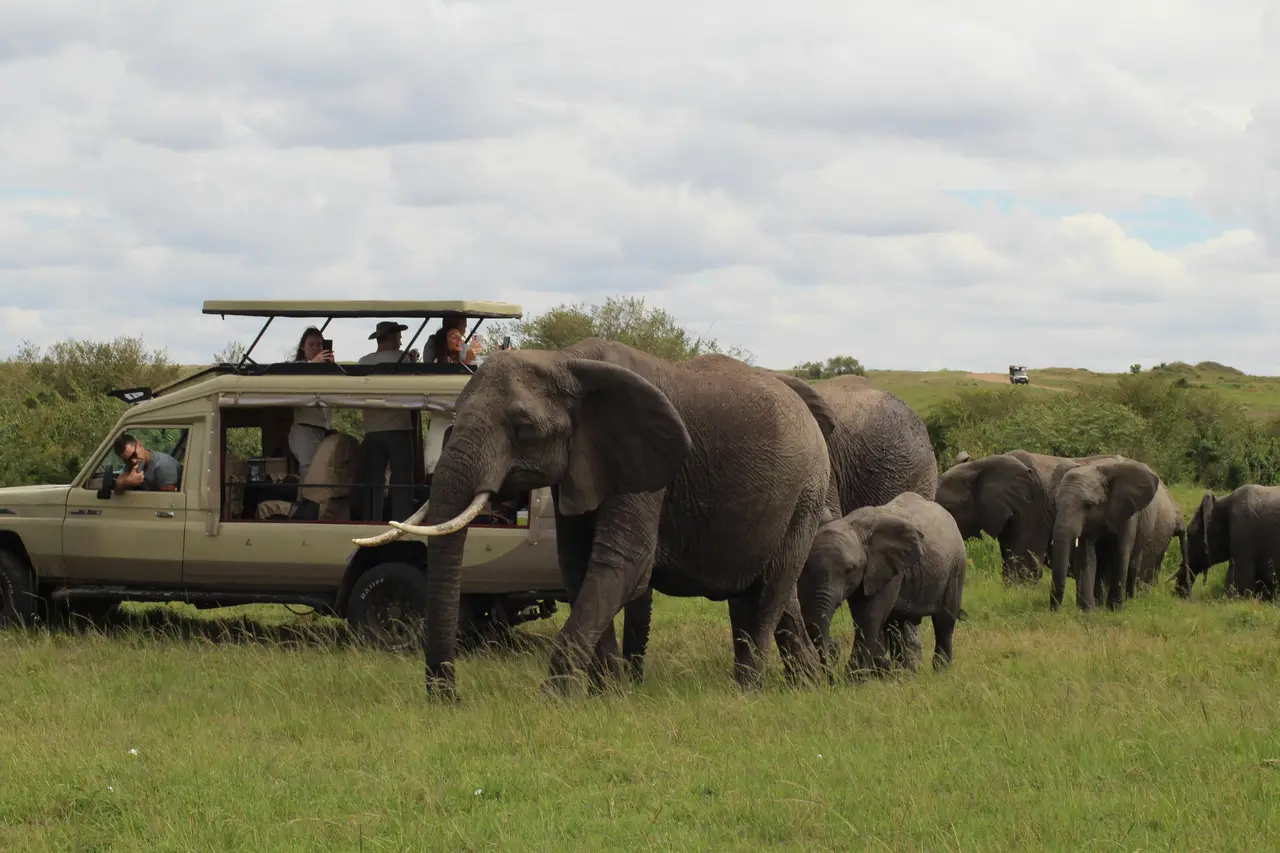
Anyone who has been on safari in high season knows the scene: a lion lying down, a cheetah on a termite mound or a leopard on a branch, and around it a ring of vehicles jostling for the best view. It is not a rare occurrence, and it is the symptom of a real problem.
What the rules say, and what happens
In the Masai Mara reserve the regulations allow a maximum of five vehicles per sighting, with viewing in turns when others arrive. Yet the reserve’s ten-year management plan, in its published summaries, describes river crossings with more than one hundred and fifty vehicles at the same scene. The problem is not a lack of rules: it is the pressure of numbers.
Why it happens
Because the sighting has become the product. If a trip is sold with the promise, even an implicit one, of seeing a crossing or a leopard, the guide is under pressure to deliver it, and the radio does the rest: a single report is enough for dozens of vehicles to converge on the same spot. The traveller wants the photo, the guide wants to satisfy them, and the animal is the only one without a voice.
What you can choose
Where to stay. The conservancies around the Masai Mara limit beds and vehicles and allow activities that are prohibited in the reserve, such as walking safaris. In the Mara Triangle, too, there are very few properties inside.
When to go. The less sought-after months and the green season have fewer vehicles and lower prices. You see differently, not less.
How to travel. A private vehicle lets you stay with a quiet sighting rather than racing towards the crowded one, and lets you tell the guide you would rather leave when there are too many vehicles.
What to ask. Be wary of anyone who guarantees sightings. Ask how the guides work and whether local communities receive a share of the revenue.
The conservancies have their limits too
They are not a perfect solution. There are tensions between some Maasai communities and the companies that run the conservancies: the complaints concern exclusion from decisions and a distribution of revenue regarded as unfair. Choosing a conservancy is a step in the right direction, not an absolution.
How we see it
That is why, on our trips, the vehicle is private and we do not promise sightings. It is not a position for show: a safari without a ring of engines around it is simply a better safari, for those who watch and for those who are watched.