Nature and wildlife 2 min read
Africa’s darkest skies: the stars of the Namibian desert
In southern Namibia lies the first African reserve recognised for the quality of its night sky. Why the stars there can be seen as in few other places on earth.
Weltweg editorial team
In this article4 sections
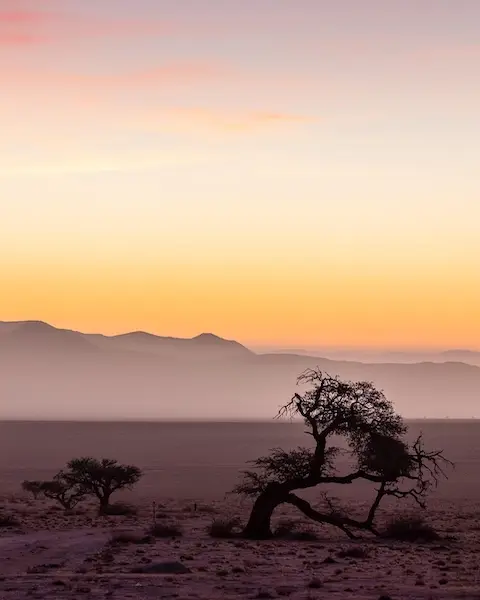
Across much of Europe the Milky Way is now invisible to the naked eye. In the Namibian desert it is the first thing you notice as darkness falls. Very dry air, few clouds for most of the year and almost no artificial light for miles around: these are the best possible conditions for looking at the sky.
NamibRand, the dark sky reserve
The NamibRand Nature Reserve, a large private reserve on the edge of the Namib Desert, south of Sossusvlei, was the first in Africa to be recognised as an International Dark Sky Reserve by the International Dark-Sky Association, at the highest tier, Gold. This means that artificial light has minimal or no impact on the night sky, and that the reserve limits and shields the lighting of its properties.
What you can see
On moonless nights, with the naked eye, thousands of stars and the Milky Way as a luminous band. From the southern hemisphere you can see the Magellanic Clouds, two galaxies close to our own that are not visible from Europe, and the constellation of the Southern Cross. In the months of the austral winter, roughly from May to August, the centre of the Milky Way passes high overhead in the early hours of the night.
How to plan
The moon matters more than anything else: if a starry sky is a priority, choose dates around the new moon. Some lodges in the area have observatories or host evenings with experts, and at some you can sleep out in the open. Bring warm clothes: in the desert, the temperature drops quickly after sunset.
What to combine it with
The dunes of Sossusvlei are close by, and a trip to Namibia that passes through here usually continues towards the Atlantic coast and Etosha.