Morocco holds different worlds a few hours’ drive apart: the medinas of Marrakech and Fez, the mud kasbahs beyond the Atlas, the Sahara dunes at Merzouga and the Atlantic coast of Rabat and Casablanca.
When to go
The best months are March to May and September to November, with mild days in the cities and in the desert. In July and August the Sahara goes above 40 degrees; in winter the sun is pleasant but nights in the desert and mountains are cold, and it can snow on the Atlas. Month by month: when to go to Morocco.
Documents and entry
Italian citizens enter without a visa for tourism for up to 90 days, with a passport valid for the whole stay. FCDO entry requirements for Morocco. Full details: visa and documents for Morocco.
Health
No vaccinations are compulsory. It is better not to drink tap water: drink bottled water. The big cities have good private clinics; health insurance is essential all the same.
What to see
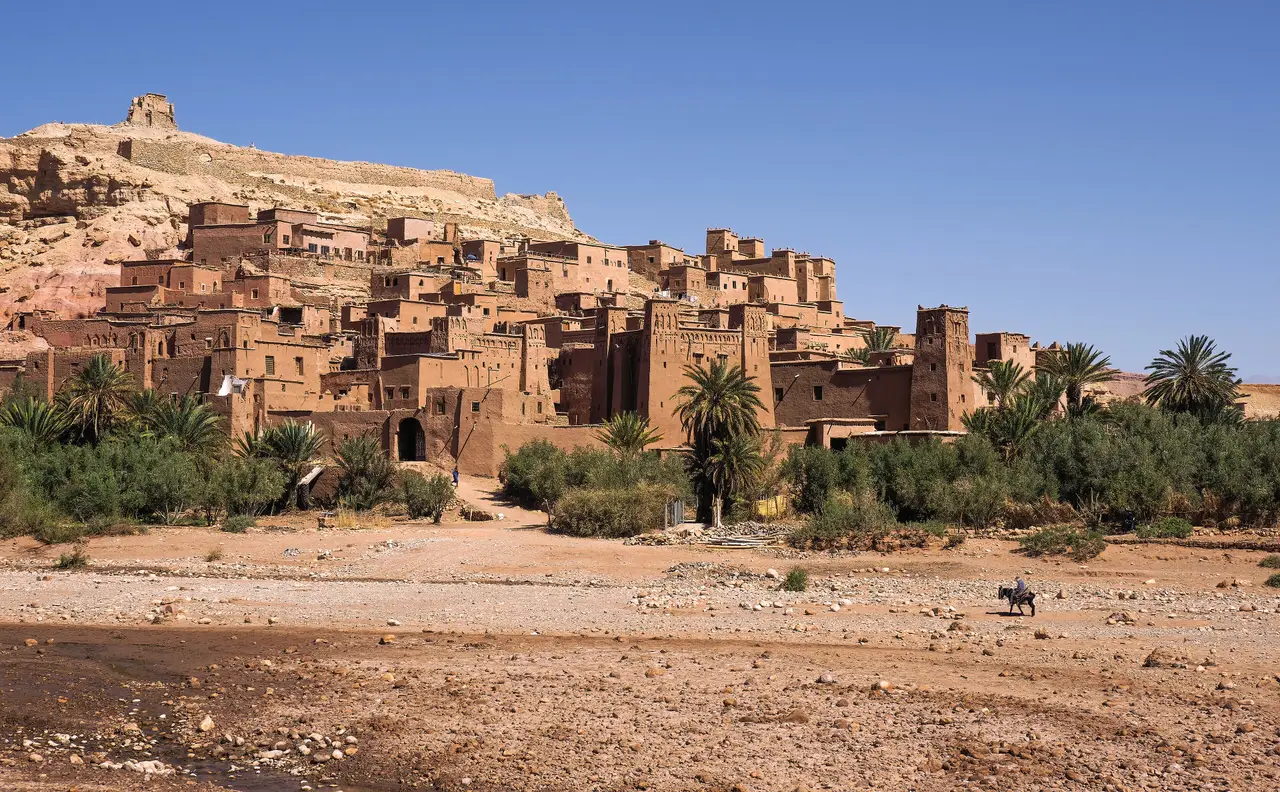
Marrakech: Jemaa el-Fna square, the souks, the Bahia Palace and the Secret Garden. Beyond the Atlas: Ait Benhaddou, a UNESCO site, Ouarzazate and the Skoura palm grove. Merzouga: the Erg Chebbi dunes, with a night in a tented camp. Fez: one of the largest and best-preserved medieval medinas, with its tanneries. Casablanca: the Hassan II Mosque on the ocean.
The Merzouga desert
Erg Chebbi, near Merzouga, is Morocco’s most famous sea of dunes: dunes up to 150 metres high that turn orange at sunset. You reach it by dromedary and sleep in a tented camp, with a Berber dinner and a starry sky.
Our trip: Morocco: Marrakech, the desert and Fez, 8 days, private with a car and driver, 4- and 5-star hotels and the international flight included.